The 20-Minute Routine That Stops School Meltdowns Before They Start
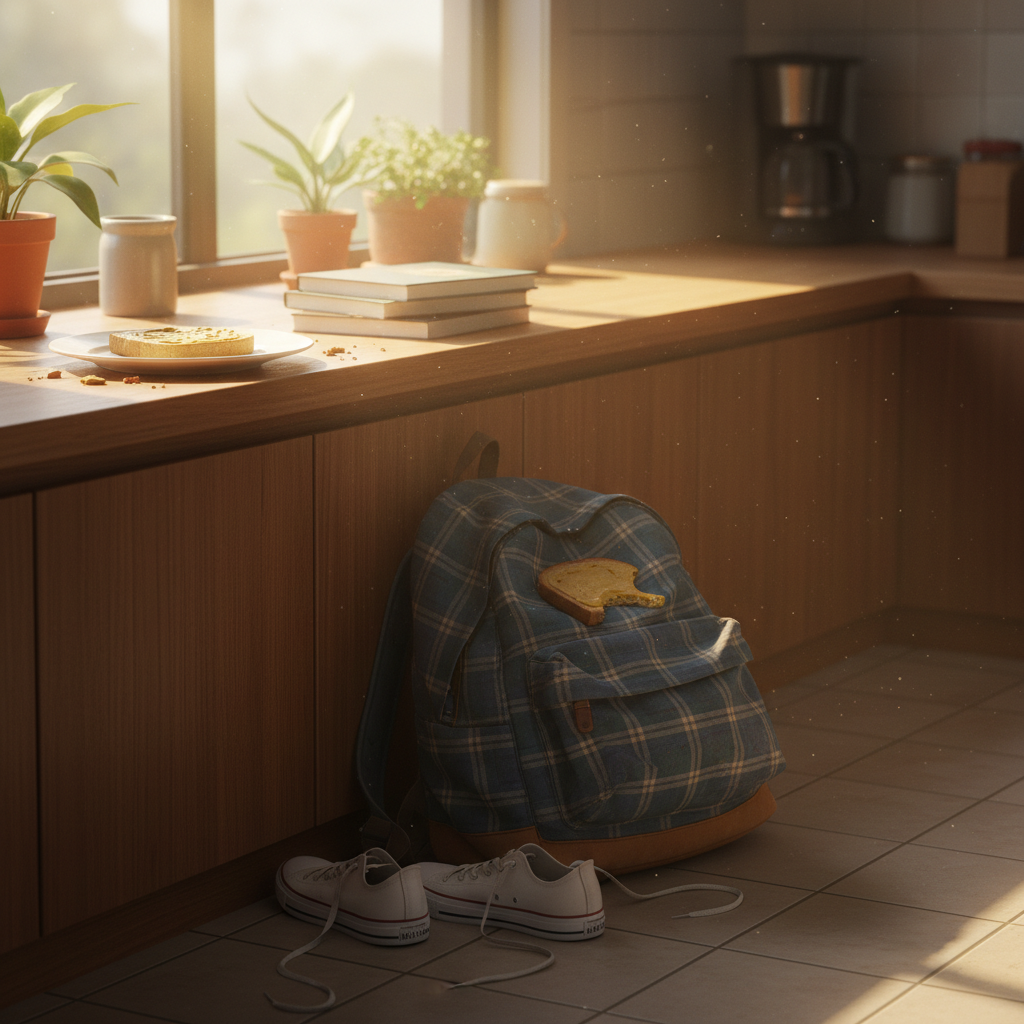
It’s 7:42 AM on a Tuesday. The year-5 maths book is shoved aggressively into the bottom of a blue school backpack. Ten-year-old Leo is sitting on the floor in the hallway, staring at a single shoe. He hasn't put it on. He hasn't even picked it up. When you ask him to please, for the fourth time, put his shoes on, the response isn't defiance. It’s a quiet, devastating whisper: "I feel sick. I don't want to go."
You’re holding a lunchbox in one hand and your own car keys in the other. Your heart sinks. You know he doesn't have a stomach bug. What he has is the Tuesday Morning Wall. The first tears start to fall, and you feel your own stress levels spike. You just need to get to work. He just needs to get to school. But the gap between the hallway floor and the school gate suddenly feels like a canyon.
Mornings like this are the messy reality of parenting school-aged kids in 2026. The meltdowns, the sudden phantom stomach aches, and the outright school refusal rarely come out of nowhere, even if they feel sudden to us. They are almost always a trailing indicator.
The Real Tension Behind the Tuesday Meltdown
When a kid falls apart over a missing jumper or a slightly-too-tight sock, it is never actually about the jumper or the sock. The modern school day is a marathon of social negotiation, sensory input, and cognitive demand. When mornings go sideways, it is usually a hangover from the day before.
We tend to look at morning chaos as a time-management issue. We think if we just wake them up ten minutes earlier, or yell a little louder, the train will stay on the tracks. But school refusal and morning tears are usually downstream of three very unglamorous things: a disrupted sleep cycle, a blood sugar crash, and one unresolved tension from Monday afternoon.
Maybe it’s a NAPLAN practice test they didn't finish. Maybe they had a weird falling out with their best friend by the bubblers at lunchtime. Maybe it’s a fraction concept that made them feel stupid in period four. Whatever it is, they went to sleep with it, and they woke up with it. The dread doesn't announce itself as dread. It announces itself as, "These socks feel wrong and I hate you."
What's Actually Working: The 20-Minute Reset
You can't fix the complexities of year-7 friendships or entirely rewrite the Australian Curriculum before the school bell rings. But you can change the trajectory of the morning. Over the last few years, working with hundreds of families, I’ve seen a pattern emerge in the households that manage to get out the door with their sanity intact. They don’t have better kids. They just have a very specific, 20-minute buffering routine.
It starts with the "No Talk Until Toast" rule. The moment a stressed kid wakes up, their brain is scanning for threats. If the first thing they hear is a barrage of questions—"Do you have your library bag? Did you finish your spelling? Where is your hat?"—their nervous system goes straight into fight-or-flight.
Instead, the first 20 minutes of the day are strictly low-demand. Wake up, open the blinds for natural light (crucial for resetting cortisol levels), and get food in front of them before asking them to make a single decision. But it can’t just be a bowl of sugary cereal, which guarantees a crash by recess. It needs to be heavy on protein and fats: eggs on toast, a thick Greek yoghurt, or even leftovers from last night. Food first, logistics second.
The 3-Part Morning Triage
When the meltdown starts to brew anyway—when the tears well up over the shoe—parents need a mental model to diagnose the problem quickly, rather than getting sucked into an argument about footwear. I call it the 3-Part Morning Triage. Ask yourself these three questions:
1. The Sleep Check: Did they actually sleep, or were they tossing and turning? If the sleep was bad, lower your expectations for the morning. "You look exhausted today. Let's just get the bare minimum done and get to the car." Empathy de-escalates; demands escalate.
2. The Stomach Check: Have they eaten protein yet? If a kid is running on an empty tank, reasoning with them is like trying to install a software update on a phone with 2% battery. Hand them a glass of milk or a piece of cheese before you say another word.
3. Yesterday's Ghost: What is the unsaid dread? Ask directly, but gently. "You seem really stuck this morning. Is this about the shoes, or are you worrying about maths with Mr. Patel today?" Naming the monster takes away half its power. They might just nod, but that nod is a release valve.
Honest Failure Modes: Solving the Wrong Problem
The place where we, as well-intentioned parents, completely ruin this process is by trying to fix the ghost at 7:55 AM.
If Leo finally admits he is terrified of going to school because he doesn't understand the algebra worksheet due period one, the worst thing you can do is pull out a pencil and try to teach him algebra at the kitchen bench. You cannot teach a stressed child new concepts while frantically looking for your own car keys. Shouting, "Just flip the fraction and multiply, Leo, it’s easy!" will only end in both of you crying.
The morning is for triage, not surgery. Your job is simply to pack the ghost away so they can survive the day. "I know that worksheet feels impossible right now. Put it in your bag. Tell Mr. Patel you got stuck, and we will figure it out together tonight. You are not in trouble."
If the ghost is always the same subject—if every Tuesday ends in tears over maths—that’s a structural problem, not a morning problem. Stop fighting about it at dawn. Let a free diagnostic pinpoint exactly where they missed a concept two years ago, so you can address the root cause on a quiet Saturday, rather than battling the symptoms on a chaotic Tuesday.
The Quiet Win
The quiet win doesn't look like a cheerful, whistling child skipping into the school grounds. That’s a cereal commercial, not real life. The quiet win is the heavy sigh they let out as they close the car door. It’s the slight relaxing of their shoulders. It’s the half-wave they give you without turning around as they walk through the gates. It’s the fact that they got there, and their nervous system isn't completely fried.
One action to try tomorrow: Stop asking questions for the first 15 minutes they are awake. No logistical queries, no reminders about permission slips. Just offer a glass of water, some toast, and quiet presence. Notice how much softer the rest of the morning feels when you aren't starting it with an interrogation.
Curious where your child is strong — and where the gaps are?
Take BrightPath's free 20-minute diagnostic, aligned to the Australian Curriculum v9.
Start the Free Diagnostic