My Kid Hates Books: How to Help a Reluctant Reader
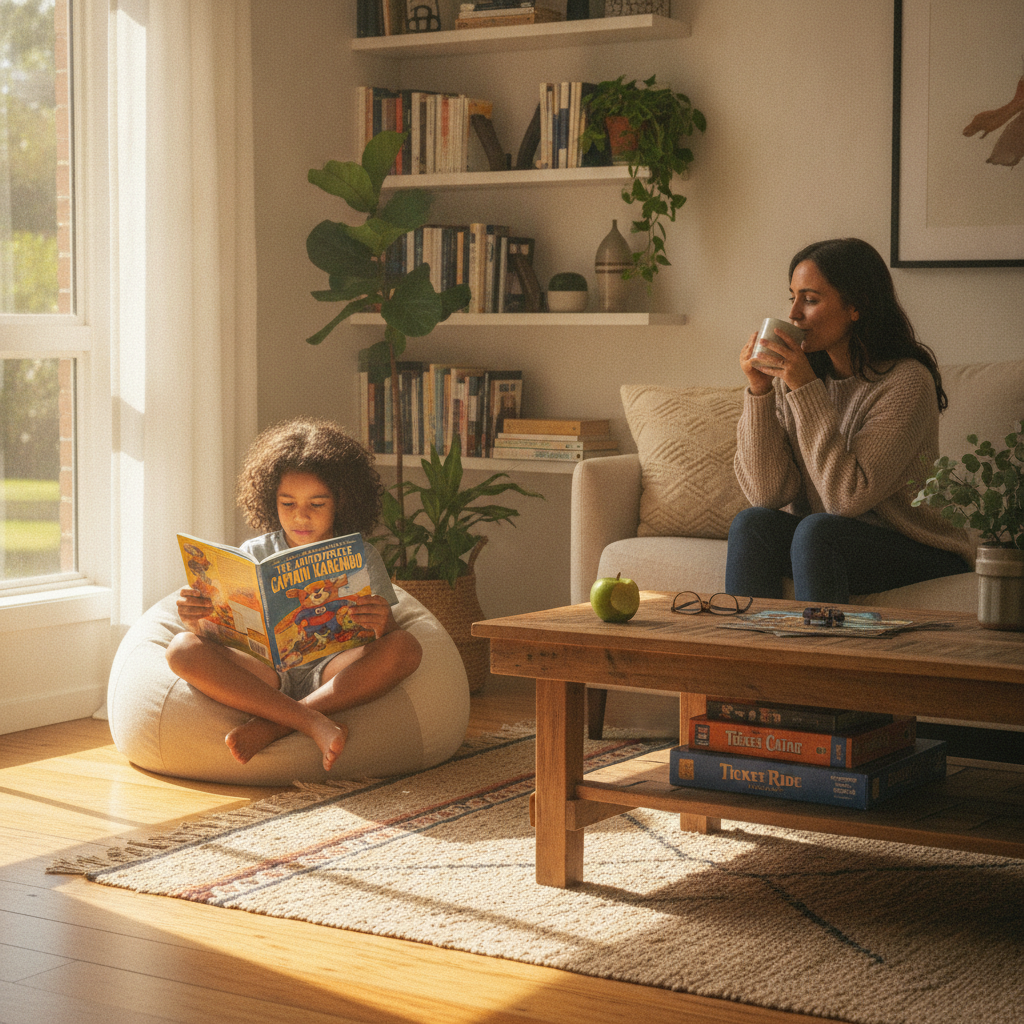
To help a reluctant reader who claims to hate books, the key often isn't finding the 'right' novel, but broadening what counts as reading. Focus on their genuine interests and explore non-traditional formats like graphic novels, audiobooks, game manuals, or even specialised non-fiction magazines. This shift can transform reading from a chore into an engaging activity.
"I hate reading," declared my 12-year-old, Liam, slamming his copy of 'Boy Swallows Universe' shut with a dramatic flourish. It was 7:30 PM on a Tuesday, and the Year 7 English assignment was due Friday. He'd been staring at the same page for twenty minutes, his phone vibrating silently under his elbow, a clear invitation to escape. I remember thinking, "But it's such a good book!" as if my opinion on a critically acclaimed novel would somehow magically unlock his engagement. The kitchen table, usually a place for homework battles over algebra, had become a battleground for literary appreciation. I just wanted him to read *something* without a fight.
The Invisible Wall: What's Really Stopping Them?
The tension around reading isn't just about a child being "lazy" or "difficult." Often, it’s a complex mix of curriculum pressure, the sheer volume of digital distractions, and a narrow definition of what "counts" as reading. In Australia, our kids are navigating the Australian Curriculum's literacy demands, with NAPLAN tests looming large from Year 3. Parents, quite rightly, worry. If my child isn't devouring novels, will they fall behind in comprehension? Will their vocabulary suffer? This anxiety can lead us to push harder, making reading feel like medicine rather than pleasure.
Meanwhile, screens offer instant gratification. Why slog through pages when a YouTube video can explain a game strategy in five minutes, or a TikTok feed delivers endless entertainment? The real problem isn't necessarily that kids don't *want* to engage with stories or information; it's that the traditional format of a novel often feels like a barrier. We're battling against the idea that only 'proper' books are legitimate, when in 2026, reading is happening everywhere, in every format imaginable.
What's Actually Working for Reluctant Readers
Forget the dusty classics for a moment and consider what kids are actually drawn to. The biggest breakthrough for many families is embracing **format flexibility**. My friend's 10-year-old, Maya, who struggled with traditional novels, devoured the entire 'Dog Man' graphic novel series. Graphic novels, with their visual cues and engaging panel layouts, help scaffold comprehension and make reading less intimidating. Research consistently shows their efficacy in building literacy skills, not just as a stepping stone, but as a valid literary form.
Then there are **audiobooks**. Services like Audible (subscriptions typically around $16.95/month for one credit) or Libby (free with a library card) open up entire worlds. Liam, the 'Boy Swallows Universe' hater, got hooked on 'The Hobbit' via Audible while we were on a road trip. He wasn't "reading" in the traditional sense, but he was engaging with complex narrative, vocabulary, and character development. Listening counts! It builds listening comprehension, which is a vital pre-reading skill and supports reading fluency.
Don't underestimate **non-fiction and niche interests**. Does your child love Minecraft? Get them the official game guides or books about building techniques. Are they obsessed with animals? Try 'National Geographic Kids' magazines (around $50/year for a subscription) or non-fiction books about specific creatures. My Year 5 daughter, Chloe, who used to avoid chapter books, now pores over cookbooks to find new dessert recipes, meticulously reading ingredients and instructions. Even the subtitles on their favourite YouTube channels or video games count as reading. Sometimes, understanding where they're really at can help – a quick free diagnostic can often pinpoint specific comprehension gaps that might be making reading feel harder than it needs to be.
The "Interest-Format-Flow" Mental Model
To help navigate the messy reality of getting kids to read, try this three-part mental model:
- Interest First: What do they *love*? This is the golden key. It doesn't matter if it's dragons, coding, true crime podcasts, or competitive gaming. Find out what truly captures their attention. Reading for pleasure or purpose, even if it's reading the stats on their favourite sports team, builds fluency and vocabulary more effectively than forced reading.
- Format Flexibility: Books aren't just paperbacks. Once you know their interest, explore *all* the formats. Is there a graphic novel about it? An audiobook? A webcomic? A magazine? A game manual? A YouTube channel with captions? A website? Let them choose the medium. The goal is engagement with text, not adherence to a specific book type.
- Flow, Not Force: Keep it low pressure. Make reading an enjoyable, low-stakes activity. Don't demand summaries, assign quizzes, or track pages read. The moment reading becomes a chore or a test, the "I hate reading" wall goes up. Focus on shared enjoyment, asking open-ended questions like "What do you think will happen next?" or "That sounds wild, tell me more!" when they recount something they've read/listened to.
This model shifts the focus from "get them to read a novel" to "get them engaged with text and story in a way that feels natural to them."
Where Good Intentions Go Wrong
Even with the best intentions, we can accidentally sabotage a child's reading journey. One common trap is the **"reading log" or points system**. While designed to encourage reading, it often turns it into a transactional activity. Liam started skimming just to hit his target chapters for school, missing the entire point of the story. The focus shifted from comprehension and enjoyment to hitting a number, making reading feel like a punishment.
Another pitfall is **over-scheduling**. A child with school, sport, music lessons, and tutoring might genuinely not have the mental space or energy for independent reading. A tired brain resists effort, and reading, even when enjoyable, requires focus. We also often make the mistake of **only offering "age-appropriate" traditional books**. If your 14-year-old is struggling with a Year 9 novel, don't be afraid to let them read a Year 5 graphic novel or listen to an audiobook aimed at a younger audience. The goal is to build confidence and fluency, not to strictly adhere to a year level.
The Quiet Win + One Action for This Week
The real win isn't always a child finishing a thick novel. Sometimes, it's the quiet moment you see them spontaneously pick up a comic, or hear them recounting a fascinating fact they learned from an audiobook. It's the shift from "I hate reading" to "Have you heard about this?" The magic happens when they realise reading, in whatever form, can be a source of genuine interest and discovery, not just a school requirement.
Your one concrete action this week: Sit down with your child and ask them, genuinely, about their favourite game, hobby, or YouTube channel. Then, collaboratively search for *any* related reading material – a graphic novel, a game guide, a non-fiction book about the topic, or even just the subtitles on a documentary. Don't worry about the "level" or the "type" of reading. Just explore their interests, and let them lead the way.
Curious where your child is strong — and where the gaps are?
Take BrightPath's free 20-minute diagnostic, aligned to the Australian Curriculum v9.
Start the Free Diagnostic