How to Set Up a Study Space Your Child Will Actually Use
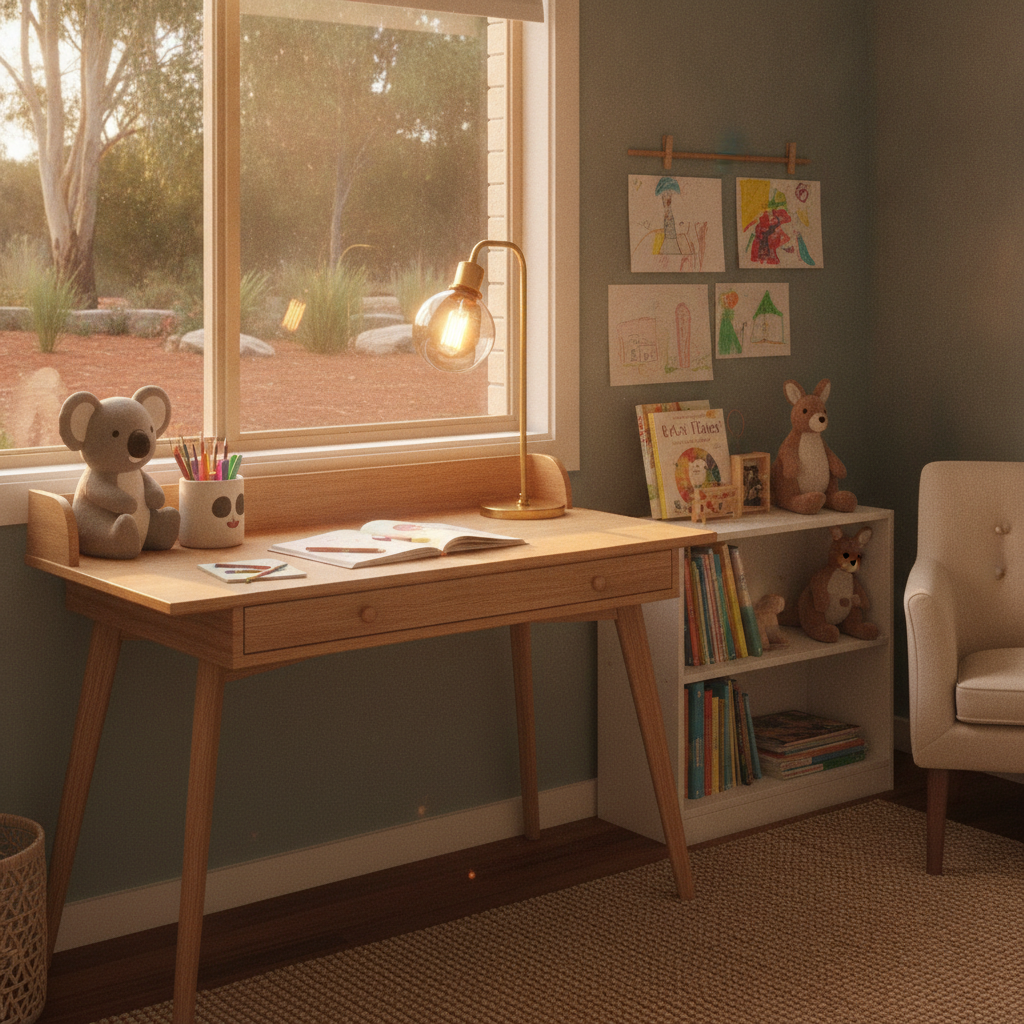
Most Australian homes have a designated study spot — the kitchen table, a bedroom desk, or a quiet corner somewhere. But a study space that simply exists is very different from one that genuinely supports focused learning. If your child constantly migrates to the couch, claims they "can't concentrate," or sits at their desk for 45 minutes and produces two sentences, the problem may not be motivation or ability. It might be the environment.
Researchers in educational psychology consistently find that the physical environment shapes cognitive performance. When students study in cluttered, poorly lit, or distraction-heavy spaces, their working memory is taxed before they've written a single word. The good news: small, deliberate changes to your child's study setup can produce noticeable improvements in focus and productivity — without spending a lot of money or renovating a room.
Here are eight practical tips Australian parents can use to build a study space that actually works.
1. Location is everything — choose it carefully
The bedroom is often the first choice, but it isn't always the best one. Bedrooms are wired for rest in the brain's associations; studying there can blur the boundary between winding down and working hard. For primary school children especially, a shared family space like a quiet corner of the dining room or a dedicated desk in the lounge can work better because it keeps a supervising adult nearby without hovering. For high school students who need longer, deeper work sessions, a dedicated desk in their room with clear "study mode on" signals (headphones in, door half-closed) can give them the privacy and quiet they need. The key rule is simple: the study space should be used only for studying, not gaming, watching videos, or scrolling. When your child sits down there, their brain should start associating it with focus.
2. Get the lighting right
Poor lighting is one of the most underrated causes of study fatigue. Working in dim conditions forces the eyes to strain, which accelerates tiredness and makes it harder to re-read complex material. Natural light is the gold standard: position the desk near a window if possible, ideally with the light coming from the side rather than directly behind or in front of a screen (both cause glare). For evening study sessions, a dedicated desk lamp with warm-white or neutral-white light (around 4000K) is far better than relying on overhead room lighting alone. Avoid cool blue-tinted LED lights late at night, as these can disrupt melatonin production and make it harder for your child to wind down after study.
3. Ergonomics matter more than you think
A child who is uncomfortable will fidget, shift position, and lose concentration far faster than one who is physically at ease. Check the basics: feet should rest flat on the floor (or a footrest), knees at roughly 90 degrees, the desk surface at elbow height when seated. The top of a screen or laptop should be at or just below eye level. Many Australian families use dining chairs at study desks — these are often the wrong height and have no back support. A simple adjustable chair, even a budget one, can make a meaningful difference for a child who sits for 45-minute sessions. A rolled-up towel in the small of the back works as a temporary lumbar support if a proper chair isn't available yet.
4. Remove digital distractions by design, not by willpower
Asking a child to have a phone sitting face-down on the desk and "just ignore it" is asking them to fight a billion-dollar technology designed to grab their attention. Willpower is a finite resource, and it gets depleted quickly. The far more effective approach is to remove the temptation by design. The phone goes in another room during study time — not face-down on the desk, and not in a pocket. If they need a computer for research or online learning, consider a browser extension like Cold Turkey or Freedom that blocks social media and games during scheduled study periods. For younger children, a simple kitchen timer can help: "phone goes in the basket for 20 minutes, then a 5-minute break." The environment does the heavy lifting so your child doesn't have to.
5. Stock it before they sit down
Every time a child gets up to find a pencil, a ruler, or their exercise book, they break their concentration and give themselves an easy excuse to wander to the kitchen or the lounge. Gather everything before study begins: the specific books and worksheets for tonight's tasks, pens, pencils, a sharpener, a ruler, highlighters, a calculator if needed, a glass of water, and a small snack if they're hungry. Spend two minutes doing this together before they sit down. This simple habit reduces the number of interruptions dramatically, and it also acts as a brief "transition ritual" that signals to the brain that study mode is starting.
6. Keep it clean and uncluttered
Cognitive load research shows that visual clutter competes for the brain's attention, making it harder to focus on the task at hand. A desk covered in random objects — old homework, toys, cables, cups — takes up mental bandwidth even when your child isn't actively looking at it. Help your child do a two-minute tidy at the end of each study session so they always sit down to a clear surface. This doesn't need to be Pinterest-perfect organisation; just enough that the desk has breathing room. A small tray or drawer for stationery, and a shelf or folder for current schoolwork, is usually all that's needed.
7. Let your child personalise it (within limits)
A study space that feels like it belongs to your child is one they are more likely to use without resistance. Let them choose the colour of their desk mat, pin up a few things they like, or pick a plant to keep on the corner of the desk. Personalisation creates a sense of ownership — "this is my space" — which increases the likelihood they'll voluntarily return to it. The caveat: avoid decorating the walls directly above the desk with busy, colourful posters that could become visual distractions. Calm, simple, or goal-oriented items (a timetable, a motivational quote, their term calendar) work far better than a collage of bright images.
8. Adapt the space as they grow
What works brilliantly for a Year 3 student is often wrong for a Year 9 student, and vice versa. Younger primary school children generally do best with shorter sessions, more adult proximity, and hands-on materials close at hand (rulers, coloured pencils, physical books). Older primary students benefit from a bit more independence but still need structure and a nearby adult for check-ins. High school students need longer uninterrupted blocks, privacy, and often dual surfaces — space for a laptop plus open textbooks simultaneously. Review the study setup at the start of each school year and at major transition points (Year 4, Year 7, Year 10) to make sure it's still genuinely serving your child rather than just being where they were told to sit.
One more thing: do a trial run before it matters
Don't wait for the night before a major assessment to find out the setup doesn't work. Once you've built the space, do a relaxed trial run on a low-stakes evening — maybe on a Sunday with a piece of homework that isn't urgent. Watch where the friction points are. Does your child keep getting up? Is the chair uncomfortable after 15 minutes? Is the light causing glare on their screen? Solving these problems before a big exam week means they're not obstacles when the stakes are high.
The environment is a tool, not a magic fix
A great study space won't automatically turn a reluctant learner into an enthusiastic one. But a poor study environment can quietly sabotage even a motivated child. Think of the space as removing barriers: every unnecessary friction point you eliminate — bad lighting, distracting devices, missing stationery, uncomfortable seating — gives your child's brain more capacity to do the actual learning. Combined with good routines, the right level of challenge, and a bit of encouragement, a well-designed study space can make a genuine difference to both how much your child gets done and how they feel about sitting down to study in the first place.
If you'd like to know exactly where your child's learning gaps are so their study time is spent on the right things, BrightPath offers a free diagnostic assessment that maps your child's strengths and gaps against the Australian Curriculum in about 20 minutes. A personalised learning plan then targets the areas that will make the biggest difference — so no study session is wasted.
Know exactly what to study — not just where
A great study space works best when your child has a personalised learning plan. Start with a free diagnostic to pinpoint exactly where to focus.
Take the Free Diagnostic