Times Tables: When Drilling Actually Helps and When It Backfires
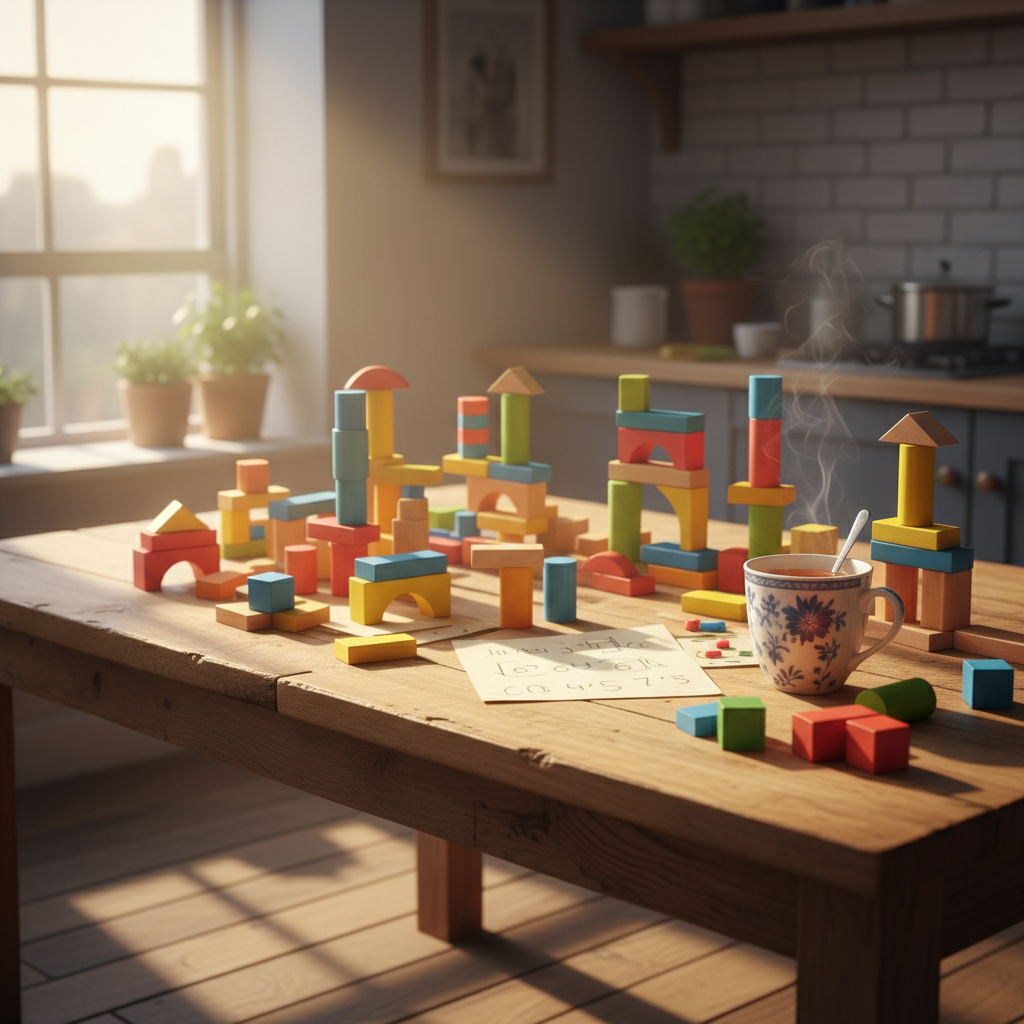
Drilling times tables is only effective when a child already understands the underlying concept of multiplication; pushing rote memorisation before that foundational understanding clicks is the leading cause of early maths anxiety in primary schoolers. It’s 6:30 pm on a Tuesday, and ten-year-old Leo is staring at a sheet of 100 multiplication questions like it’s written in ancient Aramaic. His mum, Sarah, is exhausted. "Just memorise them," she sighs, remembering her own primary school days of chanting seven-times-seven-is-forty-nine. But Leo is in tears, and the timer is ticking. This scene plays out at kitchen tables across Australia every week. The great times table debate leaves parents confused and kids stressed. We all know they need their facts by Year 6, but the path there is messier than a timed worksheet suggests.
The Real Tension: Speed vs Sense
In the Australian Curriculum, the expectation is that kids have their times tables locked down by the end of Year 4. The tension hits hard in Year 5 and Year 6. Suddenly, they are tackling equivalent fractions, area, and long division. If they don't have automaticity — the ability to recall 8 x 7 without thinking — their working memory gets entirely hijacked by basic calculation. They have no mental space left for actual problem-solving. This is exactly why teachers push for speed.
But the backlash against rote learning is real, and justified. For a generation, we equated being "good at maths" with "being fast at maths." When we force timed drills on kids who don't yet understand that 4 x 6 is just four groups of six, we aren't teaching them maths. We're teaching them panic. They learn to associate numbers with a ticking clock and feeling inadequate. The divide is sharp: anxious parents wanting old-school chanting versus a modern educational approach that sometimes swings so far toward "conceptual understanding" that kids are left trying to draw arrays to solve 9 x 8 in the middle of NAPLAN. Finding the middle ground is the hardest part.
What's Actually Working in 2026
The classrooms and living rooms getting this right aren't choosing between understanding and speed — they are purposefully sequencing them. They start with the physical reality of multiplication. They use egg cartons, Lego bricks, or arrays on a screen to show that 3 x 4 is a grid. Once the concept is rock solid, they move to strategy. Instead of treating all 144 facts as isolated items to memorise, they teach kids to use what they already know. If you know 5 x 7 is 35, then 6 x 7 is just one more seven. If you know 2 x 8 is 16, then 4 x 8 is just double that.
When it comes time for building speed, short bursts of gamified practice beat marathon worksheet sessions. Apps like Hit the Button remain incredibly popular because feedback is instant, sessions are short (often just one minute), and the pressure feels like a game rather than a test. Physical games at the kitchen table often work better than flashcards because there's a shared social element — a quick round of Multiplication Snap or rolling two 12-sided dice to see who can multiply them first.
If you aren't sure where your child's gaps are — whether they lack the underlying concept or just need fluency practice — taking a quick free diagnostic can pinpoint exactly which times tables are sticky and why. The ultimate goal is low-stakes, high-frequency practice. Five minutes of a targeted digital game while waiting in the car for footy training works significantly better than a grueling, tear-filled 30-minute Sunday afternoon drill session.
The "See, Solve, Speed" Framework
When deciding how to help your kid with times tables, use the See, Solve, Speed framework. It's a simple way to gauge exactly where your child is at, and it prevents you from asking them to run before they know how to walk.
1. Can they See it? Give them a handful of dried pasta or coins. Ask them to show you what 4 x 5 looks like. If they can't arrange them into four distinct groups of five, they don't understand the foundation of multiplication yet. Stop all drills immediately. Go back to counting physical objects and drawing pictures. Speed is irrelevant here.
2. Can they Solve it? Ask them what 7 x 6 is. If they pause, use their fingers, or quietly mumble "five times six is thirty, plus six is thirty-six, plus six is forty-two," they are solidly in the solving phase. This is fantastic. They have the mathematical strategies. They just need more time and exposure to move that calculation into long-term memory. Celebrate the strategy they used, not the speed of the answer.
3. Can they Speed it? If they can answer 3 x 4 within three seconds without calculating, they have true automaticity for that fact. Only when a child has the strategy down should you introduce speed challenges. And even then, only drill the specific facts they have already mastered conceptually to build rapid recall.
Where Well-Intentioned Drills Go Wrong
The most common failure mode I see is the "wall of numbers" approach — handing a kid a massive 12x12 grid to fill out blank. It’s visually overwhelming and inefficient. Another trap is app-hopping. Desperate parents download five different maths apps, hoping one will be the magic bullet. But if the app relies purely on speed, and the child lacks the "See it" or "Solve it" foundation, the app becomes a highly animated stress-tester. The child ends up randomly mashing buttons to make the buzzer stop, learning absolutely nothing.
Then there's the "start from the beginning" trap. A Year 5 student might know their 2s, 5s, and 10s perfectly, but gets bogged down practising them anyway because it feels safe, while actively avoiding the 7s, 8s, and 12s. Drills only work when they are targeted precisely at the edge of a child's current ability. Practising what you already know is comfortable, but it isn't moving the needle. On the flip side, practising all 144 facts at once is terrifying. The real sweet spot is isolating just three tricky facts a week and focusing entirely on those.
The Quiet Win
The real breakthrough rarely looks like a cinematic moment of suddenly reciting the 9-times tables at warp speed. It looks much quieter. It's the moment your Year 7 child is tackling a massive algebra equation or fraction problem, and they casually simplify 24/32 to 3/4 without breaking a sweat. They do it because 8 x 3 and 8 x 4 are just facts they know implicitly. That mental space saved is exactly what allows them to actually engage with the higher-level maths without melting down.
Try this tonight: Pick just one times table your child consistently struggles with (for instance, 6 x 7). Instead of drilling them on it, ask them to find three different ways to figure out the answer if they forgot it. (e.g., 5 x 7 plus another 7; double 3 x 7; 6 x 6 plus 6). Shift the entire focus from "how fast can you remember" to "how cleverly can you figure it out."
Curious where your child is strong — and where the gaps are?
Take BrightPath's free 20-minute diagnostic, aligned to the Australian Curriculum v9.
Start the Free Diagnostic