AI Tutoring in 2026: What Actually Works, What's Still Hype
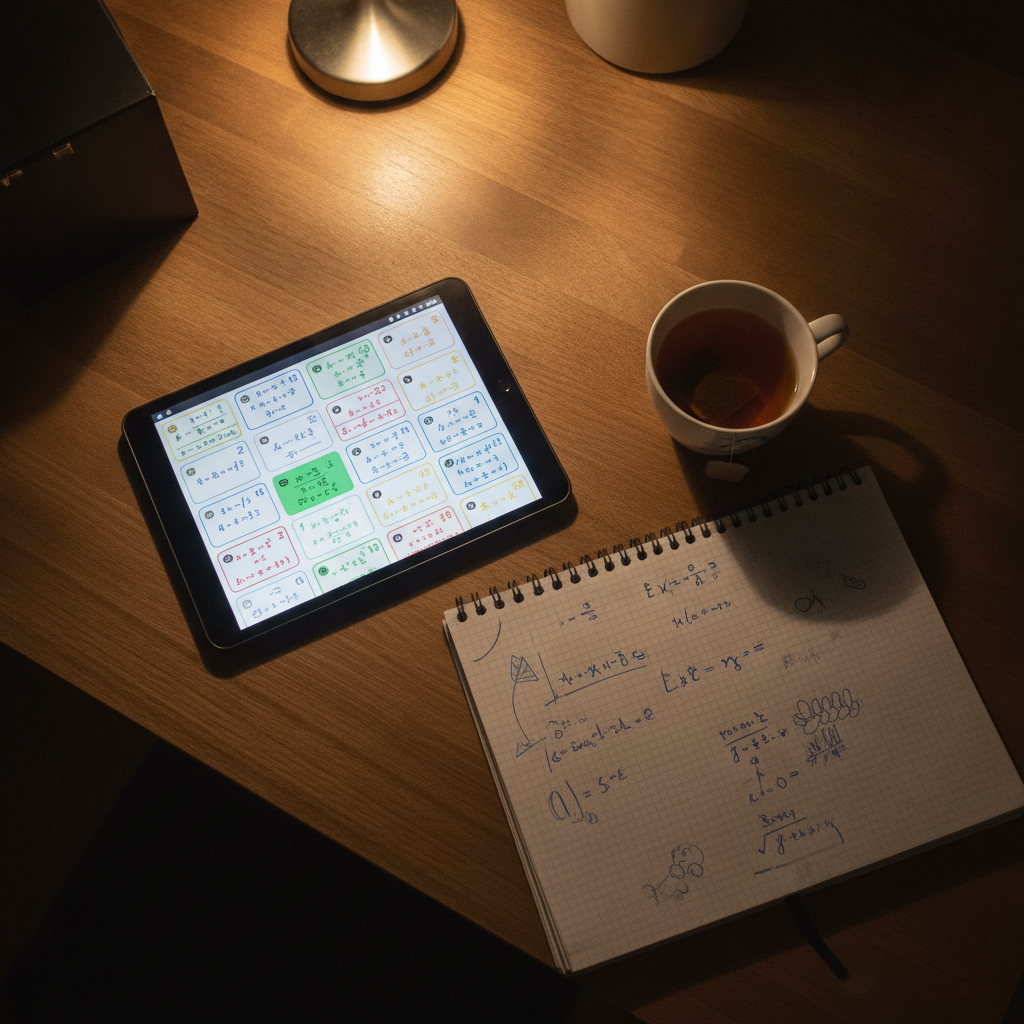
It's 8:40pm and my 13-year-old is on his third attempt at the same ratio problem, except now he's not doing it with me — he's doing it with an app that just told him, cheerfully, to "try breaking the ratio into equal parts." He tried. He got it wrong again. The app said "not quite, let's try a different way" and showed him a bar model. He got it right. He did not say thank you to the app. He also did not throw the iPad, which on a school night is its own small miracle.
Here's the direct answer, because I know that's what you came for: in 2026, AI tutors are genuinely good at instant feedback, unlimited patient repetition, and adapting the *type* of practice a child gets. They are still not good at understanding *why* a specific child is confused, or noticing that the confusion is actually exhaustion, anxiety, or a fight with a friend at lunch. That gap is the whole story.
The real tension: is this a tutor or a very patient worksheet?
Every parent I know who's tried an AI tutoring tool has hit the same wall eventually. The tool is brilliant at "here's another one, and another, and another" — my son did 40 ratio problems in the time it would've taken me to mark ten. But when he got the *same type* of question wrong for the fourth time in a row, the app kept offering fresh variations instead of stopping to ask "wait, what's actually going on here?"
A good human tutor — or a good teacher like my son's year-8 maths teacher, Ms. Alavi — would have clocked that he wasn't struggling with ratio at all. He was struggling with reading the question, because he'd started skimming out of frustration. That's a comprehension issue wearing a maths costume. No AI tool I've tested in 2026 reliably catches that distinction. They catch the wrong answer. They rarely catch the wrong reason.
This matters because a lot of the marketing around AI tutoring implies it replaces the noticing part of teaching, not just the drilling part. It doesn't. Not yet, and maybe not for a while.
What's actually working right now
The genuine wins are real, and worth naming specifically. Instant, non-judgmental feedback is the big one — kids will attempt a problem for an app in a way they won't for a parent, because there's no sigh, no "we've been over this," no visible disappointment. That's not nothing. For a kid who's already decided they're "not a maths person," removing the audience removes a lot of the shame that stops them from even trying.
Infinite practice at the right difficulty is the second real win. Tools that use adaptive item banks — nudging a question slightly harder after two correct answers, slightly easier after two wrong ones — solve a problem worksheets never could: matching the pace to the kid, not the class average. A 2024 Education Endowment Foundation review of adaptive learning technology found consistent, if modest, gains specifically in this kind of targeted practice, most pronounced for students below grade expectations — which tracks with what I've seen at the kitchen table.
Third: these tools don't get tired at 8:40pm. I do. That's a legitimate advantage, not a gimmick.
This is roughly where a platform like BrightPath tries to sit — using the AI for the repetitive, patient, always-available part of tutoring, while pushing harder than most tools on diagnosing the actual gap before drilling starts. If you want a sense of where your own kid's gaps are before paying for anything, their Free Diagnostic is a reasonable no-cost way to see that mapped out rather than guessing.
A mental model: the WEAR test
Before you commit to any AI learning tool — BrightPath included — run it through four questions. I've started calling this the WEAR test, mostly so I can remember it at 9pm when I'm tired and a sales page is making big promises.
W — What is it actually optimizing for? Time-on-app and streaks are not the same as understanding. Ask what the tool measures success by.
E — Explains, or just marks? Does it show working, or just a red X and a "try again"? A right/wrong stamp with no reasoning shown is a quiz, not a tutor.
A — Adapts to the child, or just the curriculum? Good adaptive tools change the next question based on the last answer. Great ones eventually notice a pattern of confusion, not just a wrong answer.
R — Reports back to a human? The best setups I've seen treat the AI as the practice engine and a parent, tutor, or teacher as the one reading the pattern and deciding what to do about it. If a tool has no mechanism for a human to see what's actually going wrong, it's a black box, however friendly its mascot is.
If a tool fails two or more of these, it's probably drilling, not tutoring — which can still be useful, just don't pay tutor prices for worksheet functionality.
Where it goes wrong
I've seen three failure modes up close. The first is the streak trap — my son got genuinely more invested in not breaking a 12-day login streak than in whether he understood fractions, which is exactly backwards. The second is over-scheduling: parents I know have stacked an AI tutoring app on top of an actual human tutor on top of school homework, and the kid is now doing three versions of the same maths every week with no time to just be bored, which is when a lot of real consolidation happens. The third is the false confidence problem — a kid can get 90% on an app's practice set by pattern-matching question *shapes* without understanding the concept, and then freeze on a slightly reworded version in an actual test. Apps are getting better at varying phrasing to catch this, but it's not solved.
None of these mean the tools are bad. They mean they're tools, and tools get misused when nobody's paying attention to how they're actually being used.
The quiet win, and one thing to try this week
The quiet win in my house wasn't the app solving the ratio problem. It was that my son tried a fourth time at all, on a school night, without me having to sit next to him the whole time. That's a small, real thing — not "AI is revolutionizing education," just one fewer fight over homework.
This week, try this: pick one subject your kid is currently avoiding, and instead of adding a new tool, spend ten minutes watching them use whatever they've already got — an app, a worksheet, anything — without helping. Just watch where they hesitate. That's the diagnostic no software has fully replaced yet, and it costs you nothing but attention.
Curious where your child is strong — and where the gaps are?
Take BrightPath's free 20-minute diagnostic, aligned to the Australian Curriculum v9.
Start the Free Diagnostic